Modular Office Furniture in 2026: Market Data, Regulation & Trends Shaping Indian Workplaces
22 Sept 2026 • 6 mins read
Indian offices have changed more in the last five years than in the two decades before that. Hybrid work, tighter real-estate budgets, and a younger workforce have pushed modular furniture from a "nice to have" into the default choice for most growing companies. This guide looks at what's actually driving that shift — the market numbers, the new regulatory layer, and the design trends worth paying attention to in 2026.
Part 1: The Market Behind the Trend
India's office furniture sector is growing faster than almost any other segment of the broader furniture industry, and the numbers explain why modular systems are becoming standard rather than premium.
- India's office furniture market is estimated at roughly $5.2 billion in 2026, up from about $4.8 billion in 2025, and projected to reach $7.7 billion by 2031 — a compound annual growth rate above 8%.
- Within India's total furniture market (home plus office, valued around $31.5 billion in 2026), office furniture is the fastest-growing segment, expanding at nearly 11.65% CAGR through 2031 — specifically credited to hybrid work adoption and institutional procurement.
- Globally, seating furniture holds the largest share of the office furniture market, with chairs forecast to grow at roughly 8.3% CAGR through 2031 as ergonomics and wellness stay a purchasing priority.
- Material preferences are shifting too — polymer-based furniture is gaining share over traditional wood in some segments, offering lighter, more cost-efficient designs while still meeting emerging quality standards.
The takeaway: this isn't a slow, cosmetic trend. It's a market growing faster than the general economy, with real regulatory and demand-side forces behind it — which is exactly why furniture choices made today need to hold up for several years, not just look good at move-in.
Part 2: The New Compliance Layer Reshaping Furniture Choices
From February 2026, India's Furniture Quality Control Order (QCO) made ISI certification mandatory for key furniture categories. This is arguably the biggest structural shift in the Indian furniture industry in years, and it directly affects modular furniture buying decisions:
- Furniture without ISI certification increasingly falls outside what's usable for corporate and government procurement channels, including sourcing through the Government e-Marketplace and MSME-linked programs.
- Material standards are tightening in parallel — engineered wood boards and metal frames are gaining preference partly because they more easily meet BIS standards and IGBC low-emission norms compared to some traditional materials.
- The order raises documentation and warranty expectations across the board, nudging unorganized, smaller manufacturers toward certification or out of institutional supply chains entirely.
Why this matters for modular furniture specifically: modular systems are reconfigured and resupplied more often than fixed furniture, which means certification and material compliance need to hold up across every add-on module you buy later — not just the initial order.
Part 3: The Design Trends Actually Worth Following
1. Hybrid-ready, reconfigurable desks
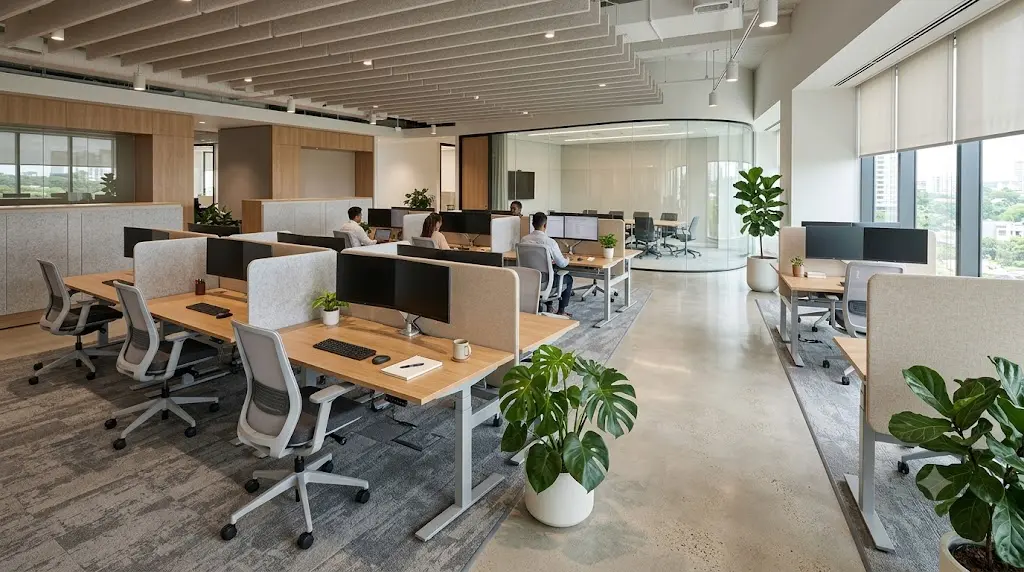
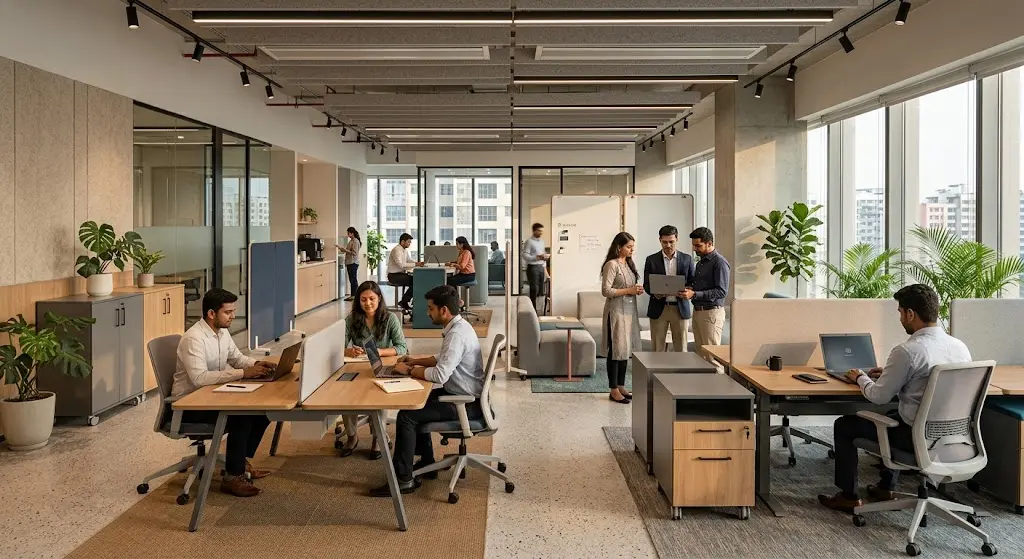
With teams splitting time between home and office, fixed desk arrangements no longer make sense for many companies. Modular workstations that can be reshuffled — from individual pods to collaborative clusters — within hours, rather than requiring a full re-fit, are becoming the standard for offices that don't want to rebuild every time headcount or attendance patterns shift.
2. Compact footprints for smaller, denser offices
As commercial rents rise in cities like Delhi and Gurugram, and as broader space-planning benchmarks trend toward tighter density (occupancy research shows average space per employee moving from roughly 165 toward 132 square feet globally), compact L-shaped desks, stackable storage, and foldable meeting tables are in high demand from startups and satellite offices trying to fit more function into less space.
3. Sit-stand and movement-friendly seating
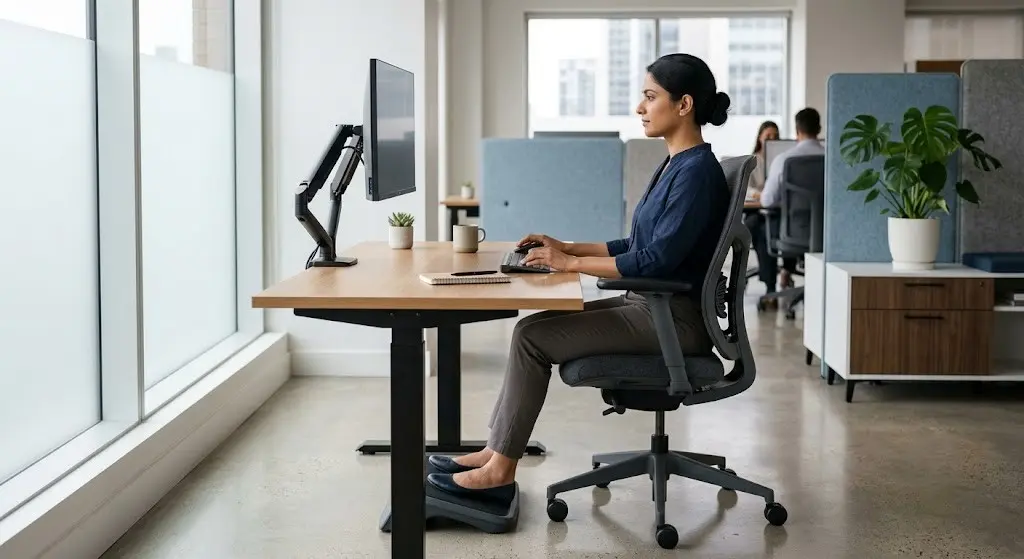
Ergonomics research has shifted from chasing one "ideal" posture toward supporting movement throughout the day — which is showing up directly in furniture design: dynamic-tilt chairs, and sit-stand desks that let employees shift positions rather than stay locked into one static setup for hours.
4. Biophilic and breakout-friendly layouts
Offices are moving away from purely functional layouts toward spaces that include greenery, informal seating, and cafeteria-style breakout zones. Furniture with warmer wood tones, curved edges, and softer fabric finishes is replacing the strictly corporate look common a decade ago — often placed near collaborative workstation clusters rather than tucked away in a separate lounge.
5. Sustainable, low-maintenance, and compliant materials
Clients are increasingly asking about material sourcing — powder-coated steel frames, engineered wood with lower emissions, and finishes that don't need frequent refinishing. With BIS's new furniture QCO in effect, sustainability claims are now backed by a formal certification layer rather than being a marketing-only differentiator.
6. Acoustic privacy without full cabins
Open offices improved collaboration but hurt focused work. The trend isn't a return to cabins — it's acoustic pods, taller partition panels, and phone-booth-style enclosures that give employees a quiet corner within an open floor plan, aligning with the same "reduce fatigue, support movement" logic driving ergonomic chair design.
7. Furniture that reflects brand identity
Reception counters, cafeteria furniture, and meeting rooms are increasingly designed to match a company's brand colors and personality — turning the office itself into part of the recruiting and client-impression toolkit, not just a functional backdrop.
Part 4: A Buying Framework for Modular Furniture in 2026
Bringing the market data, regulation, and design trends together:
- Check ISI certification status first, especially if you sell to government, PSU, or MSME-linked clients — this is now a compliance gate, not a preference.
- Buy for your density band, not your current headcount — with the market and hybrid-work trends both pushing toward denser, more flexible layouts, oversized fixed furniture becomes a liability faster than it used to.
- Prioritize movement-supporting seating and desks over static "ergonomic-labelled" furniture that doesn't actually adjust.
- Confirm material compliance across future modules, not just your first order — modular systems get expanded over time, and mismatched certification or material standards later create real procurement headaches.
- Treat breakout and acoustic zones as part of the furniture plan, not an afterthought — they're increasingly where fatigue reduction and collaboration actually happen.
Final Thought
Modular furniture isn't a passing design trend — it's the practical response to a market growing at 8-11% annually, a new certification regime tightening what companies can legally procure, and an ergonomics research base that keeps pointing toward flexibility and movement over rigid, fixed setups. Buying decisions that account for all three age a lot better than ones based purely on catalogue photos.
At Natraj Furniture, we manufacture and customize modular solutions across workstations, seating, storage, and reception furniture — built to match where Indian offices are actually headed, not where they used to be.
See our full product range: View Products | Get a Quote
Sources referenced
- Mordor Intelligence — India Office Furniture Market report; Office Furniture Market (global) report
- Expert Market Research — India Office Furniture Market Size & Share, Forecast to 2035
- Technavio — India Office Furniture Market industry analysis
- JLL 2026 Occupancy Benchmark Report (via industry space-planning summaries)
- ScienceDirect — "Active workstations: A literature review on workplace sitting"